BC-Driven Breakthrough: TCL Solar's Value Leap from Wafer Leadership to Tier 1 Module Supplier
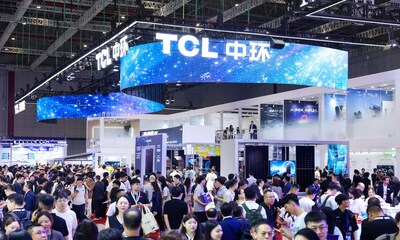
SHANGHAI, June 5, 2026 /PRNewswire/ -- Amid the PV industry's shift toward high-quality sustainable growth showcased at SNEC 2026, BC pioneer TCL Solar has transformed from a top global wafer producer into a Tier 1 module supplier.
Leading the New Era: A Dual-Engine Transformation Foundation
The PV sector enters high-quality development, prompting TCL Solar's dual layout across wafers and modules underpinned by three pillars: dominant wafer position, full industrial chain synergy and high-value product lineup.
Upstream, it consolidates silicon wafer advantages to solidify industrial fundamentals; downstream, it expands into high-efficiency modules centered on self-owned BC tech and builds a complete in-house wafer-to-module production system, capable of mass producing both BC and TOPCon products.
Silicon-Core Strength: Six Product Series Reconstructing the Value System
Wafers form TCL Solar's core business foundation. Its six customized wafer product lines set new industry benchmarks via premium quality and differentiated positioning, covering all mainstream technologies and market demands ranging from extreme performance and overseas high-end markets to cost-effectiveness and low-carbon requirements.
Guided by efficiency, intelligence and value upgrading, the firm leverages semiconductor-grade production and AI smart manufacturing to deepen cross-chain cooperation, empowering its high-reliability module development and Tier 1 development path.
Proprietary BC Leadership: Three Advantages Building a Technological Moat
Proprietary BC technology is TCL Solar's core driver for module business upgrading. As an early BC developer and mass producer, the company owns complete core patent layout across cell design, production and encapsulation.
Its BC competitiveness lies in three unique strengths: fully autonomous core IP, customized high-quality silicon wafers optimizing cell performance, and end-to-end self-controlled production enabling cost control and stable bulk delivery. Supported by these merits, the brand secures global BC leading status and paves the way for Tier 1 module supplier qualification.
Industry First: TOPCon Multi-Segment White Paper Redefines High-Efficiency Standards
Co-launched with TÜV Rheinland, TCL Solar's pioneering multi-segment module technology white paper defines new efficiency criteria. Its matching T5 PRO product obtains authoritative certification with notable power generation improvements, and the technology is poised for rapid market penetration in the coming years.
Scenario-Driven Strategy: Full Matrix Delivery for Tier 1 Strength
To qualify as a Tier 1 supplier, TCL Solar develops four core product families based on BC and TOPCon routes, covering ground power station, offshore, desert, commercial and residential scenarios with internationally recognized certification.
- Flagship BC Module: Built on advanced C3 BC processes with optimized packaging for global large-scale power projects.
- Smart Triple-Protection BC Module: Integrated multi-functional design for anti-shading, fire prevention and anti-dust to fit complex environments.
- Premium Residential BC Modules: Compact all-black and oversized shingled variants focus on rooftop aesthetics and higher power output for villas and distributed PV.
- Scenario Customized Products: T5 Pro for C&I and utility projects; salt-resistant marine module, self-clean desert module and lightweight rooftop module for respective harsh application environments.
Value Leap: Full-Chain Strength Establishes a Tier 1 Benchmark
TCL Solar's upgrade to Tier 1 module maker results from long-term tech accumulation and full-chain integration.
Going forward, the company will keep upgrading BC and TOPCon technologies, boost industrial synergy and global layout to jointly advance low-carbon PV development alongside worldwide partners.
Photo - https://mma.prnewswire.com/media/2995598/1.jpg
 View original content:https://www.prnewswire.co.uk/news-releases/bc-driven-breakthrough-tcl-solars-value-leap-from-wafer-leadership-to-tier-1-module-supplier-302792632.html