European Parliament Hosts Conference on Global Nanoplastics Risks
International experts call for research, monitoring, and public awareness on micro- and nanoplastic pollution
BRUSSELS, March 17, 2026 /PRNewswire/ -- On February 24, 2026, the European Parliament hosted an international conference titled "Nanoplastics: Hidden Connections and Emerging Risks." Organised under the auspices of MEP Ondřej Knotek in collaboration with the ALLATRA Global Research Center, the event brought together scientists, policymakers, and civil society representatives to address the growing global environmental and health risks posed by micro- and nanoplastics.
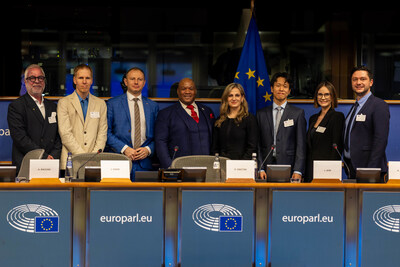
Experts highlighted that these microscopic plastic particles are found in air, water, food systems, and human tissues, posing a growing environmental and public health concern. Concentrations in parts of the Mediterranean Sea are reportedly higher than in some areas of the Pacific Ocean associated with plastic accumulation. Dr John Ahn, PhD, MBA (USA), noted: "When these particles enter the bloodstream, they can circulate throughout the body and have been detected in multiple organs, including the liver, kidneys, heart, and placenta." Anna Kotlyar, MSc (Israel), added: "Micro- and nanoplastics should be considered as a new physical and chemical factor on a planetary scale."
Health implications were discussed, including cellular damage. Alexander Masny, MSc (Germany), explained that the small size and surface charge of nanoplastics allow them to penetrate cells and affect mitochondrial function. Prof Antonio Ragusa, MD (Italy), presented research demonstrating microplastics in human placental tissue, highlighting risks for prenatal development and the need for further investigation.
Environmental and atmospheric impacts were also addressed. Czech expert RNDr Jan Kára, PhD, emphasised that nanoplastics may influence water cycles, cloud formation, and ocean-atmosphere interactions, and stressed the need for global standardised monitoring to map their distribution.
Conference participants noted the lack of worldwide monitoring standards for particles smaller than 10 microns and the absence of protocols for assessing health impacts. Particular attention was drawn to the behavior of nanoplastics, which—due to their surface charge—interact with surrounding environments, including living tissues. Coordinated international and interdisciplinary cooperation is needed to better understand these interactions and develop effective monitoring and mitigation strategies. Recommendations included strengthening collaboration across medicine, environmental sciences, and geosciences, expanding research funding, and increasing public awareness to support evidence-based policymaking. MEP Ondřej Knotek stressed the need for policies informed by emerging scientific insights. Pastor Mark Burns (USA), Chairman of the Spiritual Diplomats initiative, and Maryna Ovtsynova (USA), President of ALLATRA IPM, highlighted the moral importance of addressing these issues responsibly, calling for international dialogue and greater public engagement on global environmental challenges.
For the full press release and additional details please visit: https://allatra.org/press-release/first-steps-toward-solution-nanoplastics-were-presented-european-parliament
Media contact:
Veronika Leštáchová
events@allatraglobal.com
ALLATRA Global Research Center (ALLATRA GRC) is Registered in the EU Transparency Register (REG 1148853102055-15)

Photo - https://mma.prnewswire.com/media/2934808/ALLATRA.jpg
Logo - https://mma.prnewswire.com/media/2934807/ALLATRA_Logo.jpg
 View original content:https://www.prnewswire.co.uk/news-releases/european-parliament-hosts-conference-on-global-nanoplastics-risks-302715292.html