IIT Roorkee Inaugurates Ashok Soota Molecular Medicine Facility at BSBE to Advance Translational Biomedical Research
- State-of-the-art facility to strengthen molecular diagnostics, precision medicine, and translational research
- Industry-supported initiative reinforces academia–industry collaboration in life sciences
BENGALURU, India and ROORKEE, India, March 17, 2026 /PRNewswire/ -- The Indian Institute of Technology Roorkee (IIT Roorkee) inaugurated the Ashok Soota Molecular Medicine Facility at the Department of Biosciences and Bioengineering (BSBE), marking a significant step in strengthening advanced biomedical research infrastructure aligned with national healthcare priorities and global scientific advancements. The facility was inaugurated by Shri Ashok Soota, a distinguished Alumnus of IIT Roorkee and Chairman of SKAN Research Trust, in the presence of Prof. K. K. Pant, Director, IIT Roorkee, along with faculty members, researchers, and industry representatives.
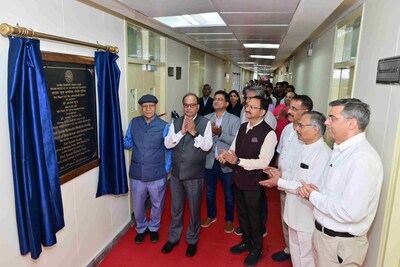
Established as a state-of-the-art, integrated platform, the Ashok Soota Molecular Medicine Facility is designed to support drug discovery, biomolecular research, and the development of next-generation diagnostic tools. The facility enables researchers to move from decoding disease mechanisms and identifying biomolecular targets to experimental validation of lead molecules and assay development. By integrating expertise in protein science, molecular and cell biology, structural biology, biophysics, analytical profiling, and advanced imaging, the facility will support high-impact research across critical disease domains, including cancer, neurological disorders, metabolic diseases, and infectious diseases.
The facility houses advanced instrumentation supporting end-to-end workflows in molecular characterization and translational research, including Automated Protein Purification Systems (AKTA and Biorad/AKTA), HPLC and UPLC systems, GC-MS, Iso-Thermal Calorimeter (ITC), Flow Cytometer, Upright Confocal Microscope, Small-Angle X-ray Scattering (SAXS), Protein Crystallization Robot, CD Spectrometer, High Pressure Homogenizer/Cell Disruptor, and other high-precision analytical platforms. This comprehensive infrastructure significantly strengthens IIT Roorkee's capability in molecular diagnostics, structural validation, biomolecular interaction studies, and advanced assay development.
Addressing the gathering, Prof. K. K. Pant, Director, IIT Roorkee, said, "The Ashok Soota Molecular Medicine Facility significantly augments IIT Roorkee's research ecosystem in biosciences and bioengineering. The integration of advanced infrastructure with interdisciplinary expertise will accelerate translational research and contribute meaningfully to national priorities in healthcare innovation, precision medicine, and scientific self-reliance."
Shri Ashok Soota, distinguished alumnus of IIT Roorkee, stated, "The establishment of this facility underscores the importance of building strong research ecosystems that translate scientific discovery into societal impact. India possesses immense scientific talent, and it is equally critical to provide world-class infrastructure and collaborative platforms to enable innovation at scale. I am proud to see IIT Roorkee strengthening its capabilities in molecular diagnostics, precision medicine, and drug discovery, contributing to healthcare solutions of both national and global relevance."
Prof. Pravindra Kumar, Head, Institute Instrumentation Center, and Ashok Soota Institute Chair Professor, added, "This facility will serve as a collaborative research platform for faculty, scholars, and industry partners. It enhances our shared research infrastructure and strengthens IIT Roorkee's capacity to undertake globally competitive, interdisciplinary research in molecular medicine and translational biosciences."
With this initiative, IIT Roorkee continues to reinforce its commitment to advancing interdisciplinary research, fostering industry collaboration, and contributing to innovation-driven solutions in areas of strategic importance to national and global healthcare systems.
About IIT Roorkee (https://www.iitr.ac.in/)
IIT Roorkee is an institute of national importance imparting higher education in engineering, sciences, management, architecture and planning, and humanities and social sciences. Since its establishment in 1847, the Institute has played a vital role in providing the country with technical human resources and know-how.
Join IIT Roorkee on Twitter: www.twitter.com/iitroorkee
Join IIT Roorkee on Facebook: https://www.facebook.com/IITRoorkee.ICC/
Join IIT Roorkee on LinkedIn: https://www.linkedin.com/school/157269/admin/
IIT Roorkee Website: https://www.iitr.ac.in/
About Ashok Soota
Ashok Soota is a serial entrepreneur, philanthropist, institution builder and author. He is Chairman of Happiest Minds, Happiest Health and SKAN.
Ashok's philanthropic institutions are Ashirvadam (2011) and SKAN (2021). The mission of SKAN is 'Transforming The Future of Medicine. Impacting Millions of Lives'.
Happiest Health is a knowledge, diagnostic, healthcare and wellness enterprise. Happiest Health's unique business model is aimed at reforming and reimagining the healthcare sector.
For Media Queries on SKAN, please contact:
Website: SKANrt.in | contactus@skanrt.in
Photo: https://mma.prnewswire.com/media/2935788/Inauguration_ASMMF_Skan.jpg
Logo: https://mma.prnewswire.com/media/2935789/Skan_Logo.jpg

 View original content:https://www.prnewswire.co.uk/news-releases/iit-roorkee-inaugurates-ashok-soota-molecular-medicine-facility-at-bsbe-to-advance-translational-biomedical-research-302715855.html