MediSun Energy and Yanrun Announce Strategic Joint Venture at SIWW 2026 to Drive Global Advanced Water Treatment and Zero Liquid Discharge Solutions
SINGAPORE, June 22, 2026 /PRNewswire/ -- MediSun Energy, a Singapore-based leader in integrated brine management, announced a strategic joint venture with Yanrun Membrane Technology Co., Ltd., a premier national-level high-tech electro-membrane pioneer, at the Singapore International Water Week (SIWW) 2026.
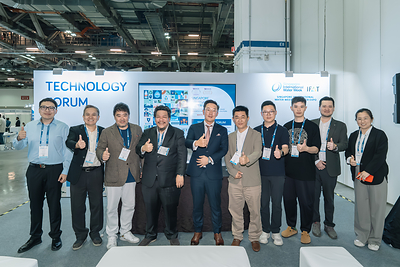
Through this strategic partnership, MediSun Energy and Yanrun will establish a new Singapore-based corporate entity, led by MediSun Energy, to serve as the exclusive global launchpad for their combined solutions outside of mainland China.
This joint venture will drive the international development, manufacturing, and distribution of a highly specialized suite of advanced systems, including Electrodialysis Bipolar Membrane (EDBM), Electrodialysis Metathesis (EDM), Electrodialysis (ED) stack systems, and Pressurised Forward Osmosis (PFO) systems, alongside integrated Zero Liquid Discharge (ZLD) solutions.
By combining MediSun Energy's extensive international network and proprietary expertise in energy-efficient brine management with Yanrun's deep R&D legacy in advanced electro-driven and bipolar membranes, the two companies will collaborate to address critical water scarcity and tightening industrial environmental regulations globally, with a specific focus on the Gulf Cooperation Council (GCC) region and Southeast Asia.
Dusun Kim, CEO & Co-Founder of MediSun Planet Pte Ltd, stated: "The global industrial market is facing an inflection point where conventional wastewater disposal is no longer sustainable, environmentally compliant, or economically viable. By combining MediSun Energy's international market reach and deep-tech brine management capabilities with Yanrun's world-class, multi-patent electro-membrane manufacturing engine, this partnership will bridge a critical industry gap. We are excited to offer heavy industry and desalination sectors across Southeast Asia and the GCC region access to next-generation, circular ZLD solutions that turn environmental liabilities into valuable resource streams."
Huang Quansen, Chairman of Yanrun, added: "Yanrun has consistently spearheaded the development, industrial application, and industry standard-setting of advanced electro-driven membranes within China. Establishing this exclusive international commercial platform alongside MediSun Energy marks a pivotal milestone in our global expansion strategy. This partnership allows us to seamlessly match our manufacturing excellence and cutting-edge membrane technology with MediSun Energy's prominent international presence, bringing clean, green, and circular industrial water reuse technologies to the global stage."
The launch of this joint venture underscores Singapore's position as a premier global hydrohub and a leading center for green technological innovation. By anchoring this international initiative in Singapore, both companies are uniquely positioned to leverage the nation's world-class business ecosystem to accelerate global climate resilience, decarbonize heavy industry, and promote long-term water security on an international scale.
About MediSun Energy
MediSun Energy is an integrated brine management company headquartered in Singapore. The company specializes in turning desalination brine and industrial waste streams into valuable resources through energy-efficient and circular solutions. MediSun's proprietary technologies — including Reverse Electrodialysis (RED) and CO₂ mineralization — are designed to decarbonize energy-intensive sectors such as desalination and heavy industry, supporting a more sustainable and resource-resilient future.
About Yanrun
Yanrun Membrane Technology Co., Ltd. is a Chinese national-level high-tech enterprise founded in 2010, specializing in the research, production, and industrial applications of electro-driven membranes. Led by prominent R&D teams, Yanrun has successfully undertaken several national-level initiatives, including China's prestigious 863 Plan, and holds 47 national invention and utility model patents, including the China Patent Excellence Award. With expansive manufacturing facilities in Mianzhu and Quanzhou, Yanrun produces tens of thousands of square meters of monolithic bipolar and homogeneous exchange membranes annually, driving sustainable circular industrial applications globally.
 View original content to download multimedia:https://www.prnewswire.co.uk/news-releases/medisun-energy-and-yanrun-announce-strategic-joint-venture-at-siww-2026-to-drive-global-advanced-water-treatment-and-zero-liquid-discharge-solutions-302804161.html