MILESEEY Earns Top Honors from MyGolfSpy, Golf Monthly, and Golf Digest; Teases New Innovation for Q3 2026
CITY OF INDUSTRY, Calif., May 27, 2026 /PRNewswire/ -- MILESEEY Golf, who devoted in premium golf technology, has achieved a major breakthrough in international recognition, securing top honors from the world's most elite golf testing and media authorities this season.
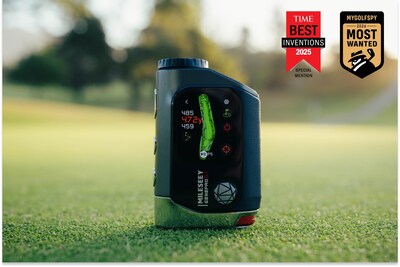
In a definitive triumph for the brand's R&D capabilities, the MILESEEY GenePro G1 has been named "Best Overall" in the Best Golf Rangefinders of 2026 awards by MyGolfSpy. Celebrated as the industry's gold standard for independent, data-driven, and entirely unbiased testing, MyGolfSpy's rigorous evaluation process strips away marketing narratives to identify true category leaders. Combining precise laser measurement with leading GPS tech on the largest touchscreen in the industry, the GenePro G1 outperformed as the premier distance-measuring device on the market.
This landmark victory comes amidst a broader wave of acclaim for MILESEEY Golf's expanding portfolio. The company's innovative 2-in-1 audio and navigation device, the Mileseey GeneSonic Pro, recently won the prestigious Red Dot Award 2026 and was crowned "Best Speaker Overall" in Golf Monthly's Best Golf GPS guide. It also earned a spot in the Golf Monthly Editor's Choice 2026, a curated list of the top 120 golf innovations globally. Further cementing its mainstream appeal, the device was handpicked by Golf Digest for its influential 2026 Father's Day Gift Guide.
The GeneSonic Pro's core innovation lies in its industry-first detachable design. By seamlessly integrating a high-precision touchscreen GPS smart module with a premium omnidirectional Bluetooth speaker, MILESEEY Golf has pioneered an entirely new category of golf speaker. This allows golfers to enjoy both immersive audio and accurate GPS information, whether mounted on the cart or carried around the course, which is expanding the broader use of the golf speaker.
"To have both the GenePro G1 and the GeneSonic Pro recognized as top-tier innovations by the world's most rigorous testing bodies is a watershed moment for MILESEEY," said Jore Chou, CEO of MILESEEY Golf. "These accolades validate our core philosophy: that true, user-centric innovation disrupts markets. We aren't just participating in the global golf tech conversation; we are driving it by redefining what golfers can expect from precision and on-course entertainment."
Looking ahead, MILESEEY Golf remains deeply committed to its founding mission of empowering golfers with accessible precision without compromise. In Q3 2026, MILESEEY Golf is set to introduce its next breakthrough innovation: MILESEEY Horizon. Designed to redefine the on-course experience, these advanced smart golf sunglasses will offer a more intuitive way to access real-time information and navigate the course, while staying true to the brand's user-first approach and dedication to engineering excellence.
To explore the technology behind our award-winning lineup, discover the Mileseey GenePro G1 and Mileseey GeneSonic Pro on mileseeygolf.com.

Photo - https://mma.prnewswire.com/media/2988772/20260527_191505.jpg
Logo - https://mma.prnewswire.com/media/2709318/Mileseey_Technology_US_Inc.jpg
 View original content:https://www.prnewswire.co.uk/news-releases/mileseey-earns-top-honors-from-mygolfspy-golf-monthly-and-golf-digest-teases-new-innovation-for-q3-2026-302783108.html