Nu Stadium, Miami Freedom Park and Boldyn Networks deliver 360° connectivity experience at Inter Miami CF's new home
Converged network elevates fan experiences and operational efficiencies
NEW YORK, May 28, 2026 /PRNewswire/ -- Boldyn Networks (Boldyn), an Official Supplier of Major League Soccer (MLS) and a global leader in shared network infrastructure, successfully deployed a comprehensive connectivity and advanced technology platform at Nu Stadium in Miami Freedom Park ahead of the stadium's April debut. The 26,700-seat stadium -set within a sprawling 131-acre mixed-use development- serves as the permanent home of Inter Miami CF, the reigning 2025 MLS Cup Champions. The newly activated network supports high-performance connectivity for fans, venue operations, and next generation digital experiences from day one.
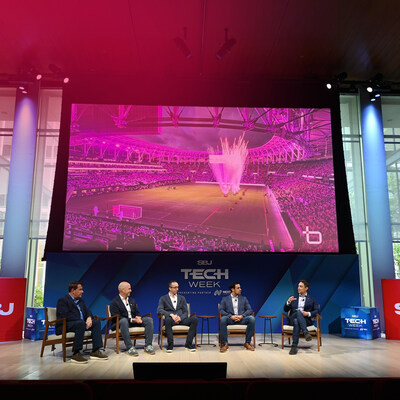
A Converged Network for a Future-Ready Stadium
As Boldyn continues to deliver on its MLS-wide promise to transform game day connectivity, this latest deployment reflects a powerful milestone: a fully integrated and future-ready converged platform. This includes high-density Wi-Fi 7, IPTV, audio and neutral host cellular connectivity (DAS), and a converged fiber plant meeting all broadcast, cellular and IT needs within the same infrastructure.
Transparent and Predictable Financial Model
All elements were delivered through an innovative Technology as a Service model, eliminating the need for significant upfront capital investment by the club. Boldyn invested the necessary capital to deploy a fully modern technology stack, enabling immediate access to advanced capabilities. Nu Stadium benefits from state-of-the-art technology from day one-paired with the long-term commitment of Boldyn as a collaborator to operate and manage the network. This approach ensures sustained performance, scalability and continuous innovation over time.
Nu Stadium and Miami Freedom Park represent the latest addition to Boldyn's growing portfolio, demonstrating how advanced technology and creative financing models can come together to elevate the fan experience.
A digital-first stadium for a digital-first fan base
Fans experience lightning-fast connections, seamless digital experiences, and a stadium that functions as part of a larger connected campus. Boldyn's converged fiber-based architecture supports all mission-critical stadium systems and enhances day-to-day operations, including:
- Always-on connectivity: More than 600 access points for high-density Wi-Fi and cellular support to connect fans and staff throughout the stadium and across the 131-acre development.
- Immersive fan experiences: The network enables frictionless mobile ticketing, in-seat ordering, and interactive content. Content innovators have also integrated immersive AR/VR experiences to transform how fans interact with the match.
- Operational excellence: A converged system manages thousands of networked devices, including building management, lighting, security cameras, and audio speakers to ensure the venue runs at peak efficiency.
- Data and insights: Cloud-based IoT platforms and custom dashboards deliver real-time analytics on crowd management and fan behavior, allowing stadium operators to improve safety and staff coordination.
- Broadcasting and media: The infrastructure includes extensive cabling to support streaming game broadcasts and over 200 connected TVs so fans never miss a moment of the action.
Jason Caliento, CCO US, Boldyn Networks said: "When we announced our MLS partnership last year, we made a promise to elevate the league's digital experience. Our work with the incredible team at Miami Freedom Park is proof we're delivering. We're designing, building and operating the entire tech stack in Miami with an innovative financial structure, and we're expanding partnerships with best-in-breed providers AmpThink and MasTec. With this model, we're able to deliver state-of-the-art experiences for Inter Miami fans and provide ownership with significant financial flexibility. We're confident it's a model that teams around the country will want to emulate."
Chris Schlosser, Senior Vice President Emerging Ventures, MLS commented: "In 2025 the MLS once again had the second highest attendance in global soccer, and our live fan experience continues to be an area of focus across the league. Inter Miami and Miami Freedom Park's work with Boldyn Networks demonstrates an outstanding commitment to a state-of-the-art fan experience and serves as a testament to the innovative advancements we're making as a league."
Delivering on the MLS Vision to Elevate the Fan Experience
Boldyn continues to scale its league-wide impact. As an Official Supplier of MLS, the company is designing and deploying seamless, secure, and scalable connectivity across matchday venues, training grounds, and fan experiences.
Nu Stadium and Miami Freedom Park mark a new chapter where technology, creativity, and community come together to deliver a global-caliber venue in the heart of Miami.
About Boldyn Networks
Boldyn Networks designs, builds, and operates advanced network infrastructure where connectivity matters most. As the world's leading neutral host provider, we enable mobile operators, large enterprises, and government agencies to create exceptional connected experiences no matter how complex the environment. From major transport systems, airports, stadiums, campuses and military bases to industrial hubs and smart cities, Boldyn brings 5G, fiber, Wi‑Fi, private 5G networks, and IoT together into tailored resilient, high‑performance platforms.
Learn more at: www.boldyn.com
Photo - https://mma.prnewswire.com/media/2989951/SBJ_Solo_image_square_052726.jpg
Logo - https://mma.prnewswire.com/media/2141806/Boldyn_Logo.jpg
 View original content:https://www.prnewswire.co.uk/news-releases/nu-stadium-miami-freedom-park-and-boldyn-networks-deliver-360-connectivity-experience-at-inter-miami-cfs-new-home-302784738.html