Segway Expands Global Omni-Channel Network With New Models and Real Range Standard
New all-terrain and long-range e-scooters — ZT3 MAX and MAX G3 Pro — debut as Segway scales up worldwide sales and service alongside the "Range at Max. Speed" testing protocol.
COLOGNE, Germany and PARIS, Oct. 7, 2026 /PRNewswire/ -- Segway, the global leader in innovative personal transportation and service robotics, today announced at simultaneous launch events in Cologne and Paris an expansion of its global omni-channel sales and service network alongside two new models, the ZT3 MAX and MAX G3 Pro.
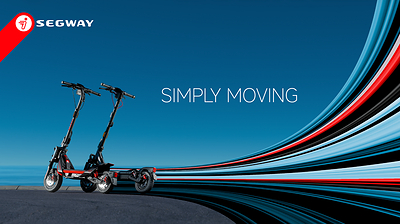
A further launch event in Barcelona later this month extends the European launch. Built on Segway's proven ZT and MAX G series, the new models enrich Segway's premium lineup.
Built for the Way People Actually Ride
Segway's new premium models address the two most common e-scooter complaints: range figures that don't match real-world use, and handling confidence that falls short for daily riding. The two new models target two key use cases:
ZT3 MAX: All-Terrain Confidence
Built for demanding urban roads and mixed terrain, the ZT3 MAX combines all-terrain capability with Segway's new ICBS (Intelligent Combined Braking System) for smoother, more confident stopping on uneven surfaces.
MAX G3 Pro: Long-Range Daily Commuting
Built for longer daily journeys, the MAX G3 Pro pairs a high-capacity battery with built-in fast charging, delivering comfortable, stable long-distance rides.
Real Range: What You See Is What You Ride
For e-scooter buyers, advertised range is often the first indicator of whether a product can meet daily travel needs without frequent charging.
Segway's Real Range standard builds on TÜV's "Range at Max. Speed" testing protocol. Instead of idealized conditions, it tests every mode at full speed until the scooter slows to 60% of the maximum. Segway will apply this standard across its new premium lineup and future generations and call for industry-wide adoption of standardized, real-world range labeling.
Powered by Segway's proprietary SegRange™ efficiency technology, real-world range is 60–72 km (ZT3 MAX) and 80–100 km (MAX G3 Pro), varying by local speed regulations across markets.
Global Omni-Channel Sales and Service Network
Segway is expanding its global omni-channel network to make e-scooters easier to buy, repair and own. Three complementary channels — national retail partners, specialist dealers offering test rides and local repairs, and official online channels — provide consistent, reliable support however riders choose to purchase.
In Europe, Segway plans to build a network of 1,000 specialist dealer partners over the next five years — including Segway Service Dealers — while rolling out a self-repair program across Europe and Asia-Pacific, building on its US model, where 65% of common repairs are completed by users at home.
"As e-scooters evolve into daily transport, riders around the world deserve products that work as promised, and service that supports them long after purchase," said Johnny Zhang, Vice President of Segway Micromobility Business Group. "These new models are made for real daily riding, with range numbers measured on real roads, and support that doesn't leave you stranded."
Availability
Europe: ZT3 MAX and MAX G3 Pro will be available from November — in Germany (20 km/h D-version, eKFV-compliant) and in France and Spain (25 km/h E-version models). Region-specific pricing will be announced closer to sales start.
United States: MAX G3 Plus is available for purchase with an MSRP of $1,499.99 at store.segway.com as well as trusted retailers including Amazon and Best Buy.
Asia Pacific: The ZT3, another version of the all-terrain ZT flagship series, will roll out progressively across multiple countries within 2026. Product availability and pricing will be communicated locally at launch.
About Segway
Segway transformed micromobility in 1999 with the revolutionary Personal Transporter, igniting global curiosity about the future of personal transportation. With a mission of "Simply Moving", Segway is dedicated to simplifying how people and goods move, improving efficiency, and enhancing the overall experience of everyday life.
For decades, Segway has continuously set new benchmarks in short-distance transportation and consumer robotics, constantly pushing the boundaries of innovation. Today, as the global leader in innovative personal transportation and service robotics, Segway's offerings have evolved far beyond its origins. From eKickScooters and GoKarts to e-bikes, powersports vehicles, and personal robots, Segway is pioneering the future of mobility with breakthrough technology, delivering innovative products that redefine the way we move. Discover more at www.segway.com.
 View original content to download multimedia:https://www.prnewswire.co.uk/news-releases/segway-expands-global-omni-channel-network-with-new-models-and-real-range-standard-302900975.html