SmallRig Hosts 3rd Visionary Storytellers Industry Forum, Releases Top 12 Global Imaging Scenarios Report
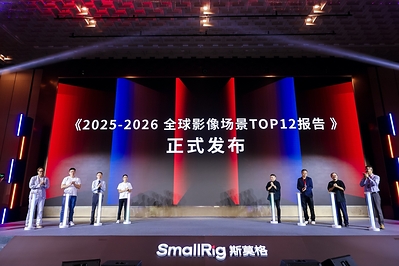
SHENZHEN, China, Oct. 8, 2026 /PRNewswire/ -- SmallRig successfully hosted the 3rd Visionary Storytellers Industry Forum in Shenzhen. Under the theme "Connect • Co-exist • New Frontier," the event brought together global imaging and technology brands, creators, investment institutions, and academic pioneers to discuss the next wave of growth in the industry. A major highlight of the forum was the official release of the highly anticipated "2025-2026 Top 12 Global Imaging Scenarios Report," providing a new roadmap for the entire market.

Based on extensive user research and market analysis, the report identifies 12 core imaging scenarios shaping the year ahead: everyday life, unscripted livestreaming, intangible cultural heritage & folk traditions, recreational sports & outdoor activities, extreme sports, interest-based communities, live performances, scripted storytelling, micro-dramas, social impact documentaries, wildlife & macro photography, and specialized imaging.
The report also highlights four key trends driving the industry today: mobile cinematography, the decentralization of professional institutions and resources, democratization of creators, and AI-powered video generation.
Data from the report underscores that over the next five years, the growth rate of peripheral equipment is projected to reach 9.2%, notably outpacing that of host devices. Addressing the rapid rise of technology, the report proposes the philosophy of "AI for efficiency, humans for warmth," arguing that as algorithms generate increasingly realistic content, real-world experiences, on-site judgment, and human creator accountability will become the ultimate scarce resources.
Zhou Yang, Founder and CEO of SmallRig, noted that the company has maintained an average annual growth rate of approximately 30% over the past five years. "The professional and consumer imaging markets are now rapidly merging. This shift is ushering in a golden era of the imaging scenario industry."
In addition, the forum featured three parallel sessions. The Technology & New Frontier session focused on AI vision, intelligent tracking, robotics, and innovative hardware, discussing demand validation and global market entry from concept to mass production. The Product & Cultural Creativity session explored how aesthetics and cultural expression influence product value from the perspectives of investment, art, industrial design, and IP. The Talent & Future session focused on talent cultivation, exploring collaborative models between academia and industry to nurture cross-disciplinary professionals skilled in technology, products, and content.
"In a market with such fragmented and fast-changing user needs, it is incredibly difficult for any single company to handle the entire process from spotting a need to launching a product alone," Zhou added.
To bridge this gap, SmallRig is committed to building an open, collaborative ecosystem that seamlessly connects users, industry partners, and creators. The company provides R&D teams and innovators with access to its robust supply chain capabilities, supporting projects from proof of concept and pilot testing through prototyping and mass production. SmallRig will also leverage its global Direct-to-Consumer (DTC) brand platform to support product validation, joint marketing, and pre-sales, while backing new projects through dedicated angel and industrial investment funds.
The next round of competition will not be won through hardware specs alone. Success belongs to those who can get closer to real-world scenes early on, spot unmet user needs, and turn technology into products that are easy to understand and use. With this shift, the "new frontier" of the imaging scenario industry is moving beyond abstract concepts and becoming a concrete, collaborative reality.
About SmallRig
Founded in 2013, SmallRig is a global provider of imaging solutions, offering a comprehensive ecosystem of camera and mobile accessories, lighting, power, and audio products. Known for its versatile and highly compatible product ecosystem, SmallRig supports creators in over 160 countries worldwide.
For more information, visit:www.smallrig.com
 View original content to download multimedia:https://www.prnewswire.co.uk/news-releases/smallrig-hosts-3rd-visionary-storytellers-industry-forum-releases-top-12-global-imaging-scenarios-report-302902259.html