UZ and KU Leuven: NeuroEXPLORER PET makes detection of early phases of diseases possible
A scientific breakthrough with immediate clinical impact: Ultra-high-resolution PET imaging supports early detection, clinical decision-making, and neuroscience research
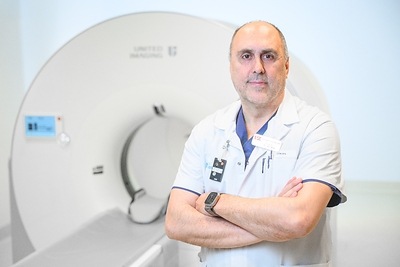
ROTTERDAM, Netherlands, June 12, 2026 /PRNewswire/ -- UZ Leuven and KU Leuven from Leuven, Belgium have introduced the NeuroEXPLORER PET into clinical practice, one of the world's most advanced ultra-high resolution PET scanners delivered by United Imaging Healthcare. The system has been operational for six months and has already supported imaging in over 400 patients. It marks a transformative milestone in molecular brain and head & neck imaging, enabling visualization of structures and circuits in patients at near-millimetre resolution that were previously inaccessible in living patients.
Early Detection and Precision Diagnosis
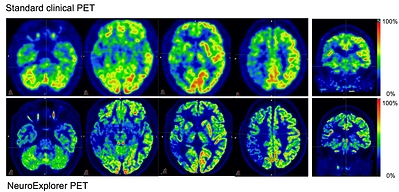
Working with the NeuroEXPLORER PET enables researchers and clinicians to identify disease processes at the very earliest stages of disease, particularly in neurodegenerative diseases such as Alzheimer's, Parkinson's and ALS. By detecting the effects of key chemical signals associated with these diseases, the system enables earlier and more precise diagnosis, as well as the detection of very small abnormalities, including brain tumours. According to Koen Van Laere, Professor of Nuclear Medicine and Principal Investigator: "This technology fundamentally changes how we can investigate the origins and diagnoses of neurological and psychiatric diseases, as well as vascular diseases and head- and neck disorders such as tumours. It allows us to measure disease processes in very small structures with unprecedented precision."
Clinical and research applications
The scanner contributes to both fundamental and prospective clinical research programs, including:
- Neurodegeneration (Alzheimer's disease, Parkinson's disease, Amyotrophic lateral sclerosis (ALS))
- Drug-resistant epilepsy in adults and children
- Deep brain stimulation planning in Parkinson, OCD and epilepsy
- Brain vessel inflammation and carotid artery plaque imaging to assess stroke risk
- Accurate detection and staging of brain, head & neck tumours, pituitary and parathyroid adenoma
The system enables very precise localisation and quantification of key biological processes in the brain, including synaptic density, tau and amyloid accumulation, dopaminergic and noradrenergic systems in small brain stem nuclei, microglial activation in neuroinflammation, and metabolic brain connectivity. Comparative studies with standard-of-care imaging already indicate improved individual treatment decisions.
Advancing neurosurgical precision
For neurosurgical procedures such as the treatment of small pituitary tumours and deep brain stimulation, precise targeting is critical. Thomas Decramer, neurosurgeon at UZ Leuven, said: "Ultra-high resolution imaging improves our ability to define optimal resection of microtumours in the pituitary that overproduce certain hormones, and also improves the placement of electrodes for neurostimulation. This has direct implications for successful surgical outcomes and for rendering patients disease free in cases of pituitary tumours." The combination of very high sensitivity and ultra-high spatial resolution supports applications ranging from neurodegenerative diseases and epilepsy to vascular disorders and neuroinflammation, expanding opportunities for both clinical investigation and patient care.
Expanding opportunities for research and collaboration
Mathieu Vandenbulcke, Chair of the Leuven Brain Institute, said: "The NeuroEXPLORER strengthens Leuven's international position in brain research and precision medicine. It creates a unique platform for global scientific collaboration."
Over the next five years, the scanner will support more than thirty large-scale research programs across neurodegeneration, psychiatry, epilepsy, neuromodulation, inflammation and oncology. Among them are studies investigating brain stem nuclei affected in the earliest stages of Alzheimer's disease, with the aim of improving understanding of disease progression and supporting more personalised treatment approaches.
For more information
About KU Leuven
KU Leuven is Europe's most innovative university (Reuters) and ranks 43rd in the Times Higher Education World University Rankings. As Belgium's largest university, KU Leuven welcomes 65,000 students from over 140 countries. The University's more than 8,000 researchers are active in a comprehensive range of disciplines. KU Leuven is a founding member of the League of European Research Universities (LERU) and has a strong European and international orientation. University Hospitals Leuven, its network of research hospitals, provides high-quality healthcare and develops new therapeutic and diagnostic insights with an emphasis on translational research.
Read more: www.kuleuven.be/english/kuleuven/
About UZ Leuven
As Belgium's largest university hospital, UZ Leuven wants to push boundaries by combining specialised care and innovative treatment with humane attention and respect for every patient. Every day, almost 10.000 passionate employees provide the best customised care possible. At UZ Leuven, future care providers and employees are guaranteed high-quality training, with a view to life-long learning and innovation. As a pioneer in clinical research, the hospital also contributes to future patient care.
Read more: https://www.uzleuven.be/en/about-us
About United Imaging Healthcare
United Imaging Healthcare is a global innovator in advanced medical imaging technologies and intelligent healthcare solutions, with native AI embedded across their portfolio to deliver real clinical impact at scale. The company develops advanced imaging, radiotherapy and digital technologies designed to support clinical decision making and expand access to high quality care worldwide. This includes state-of-the-art solutions for Magnetic Resonance Imaging (MRI), Computed Tomography (CT), Molecular Imaging (PET/CT and PET/MR), Digital Radiography (including mammography and mobile C-arm solutions), as well as advanced medical imaging software. To learn more, visit United-Imaging: United Medical Imaging Healthcare Innovator or follow United Imaging Healthcare Europe on LinkedIn.
 View original content to download multimedia:https://www.prnewswire.co.uk/news-releases/uz-and-ku-leuven-neuroexplorer-pet-makes-detection-of-early-phases-of-diseases-possible-302798990.html