Waters Launches Coin Cell Differential Scanning Calorimeter (DSC) to Advance Battery Safety with Integrated Thermal, Evolved Gas, and Electrochemical Analysis
- Integrates heat flow, evolved gas, and electrochemical analysis in a single experiment, enabling earlier insights into thermal runaway.
- Unique whole-cell design eliminates cell teardown, reducing sample preparation time by >90%.
- Industry-leading Coin Cell DSC temperature range from –80 °C to 600 °C, aiding battery development and QA/QC.
MILFORD, Mass., June 9, 2026 /PRNewswire/ -- Waters Corporation (NYSE: WAT) today announced the launch of the Waters TA Instruments™ Coin Cell Differential Scanning Calorimeter (DSC), designed to transform battery safety testing. Purpose-built for battery scientists, the Coin Cell DSC enables direct testing of fully assembled coin cells, eliminating time-intensive preparation steps while delivering faster, more descriptive safety and performance insights.
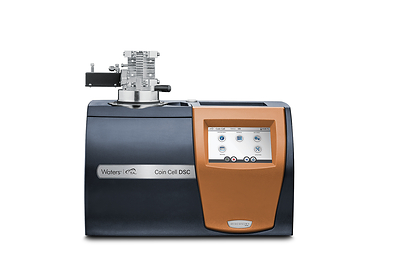
The Coin Cell DSC is the only commercially available DSC1 that provides multidimensional data capture and enables researchers to collect whole-cell thermal data while simultaneously measuring evolved gas and electrochemical performance. By incorporating voltage monitoring and charge/discharge capability, researchers can directly correlate thermal and electrochemical behavior enabling earlier insights into thermal runaway and battery failure. It can also be coupled with MS, Fourier Transform Infrared Spectroscopy (FTIR), or Gas Chromatography-Mass Spectrometry (GC-MS) to enable direct analysis of off-gas composition.
"The Coin Cell DSC represents a significant advancement in battery thermal analysis," said Yu Cheng, Vice President, Research and Development and Product Solutions, Materials Sciences, Waters Corporation. "Simultaneously capturing thermal, evolved gas, and electrochemical data is not only faster, but also correlates data from the same sample for more exacting insights earlier in development. With its broad temperature range and streamlined workflows, the system is designed to reduce experimental complexity while outperforming current approaches."
The Coin Cell DSC introduces a unique capsule design that eliminates the highly time-consuming need for cell teardown, reducing the average sample preparation time by more than 90%.2 This approach preserves sample integrity while significantly accelerating data generation.
The new system redefines thermal analysis by integrating advanced temperature performance, efficient workflows, and multidimensional data capture into a single platform. With an industry-leading –80 °C to 600 °C range,3, 4 the Coin Cell DSC enables comprehensive analysis of low- and high-temperature behavior, expanding future applications in development and QA/QC.
"The battery industry has long needed a solution that bridges the gap between materials thermal analysis and full-cell DSC testing. This technology enables the evaluation of full-cell thermal stability by incorporating gas analysis and electrochemical data—capabilities that are essential for advancing early-stage battery safety research," said Shirley Meng, Professor, Pritzker School of Molecular Engineering, University of Chicago and Director, Energy Storage Research Alliance (ESRA).
Traditional battery safety testing methods, such as accelerating rate calorimetry (ARC), are deployed during late-stage research and development and require large cell formats, specialized facilities, and long experiment times. In contrast, the Coin Cell DSC enables direct evaluation of intact coin cells earlier and faster, streamlining development and reducing risk.
The Waters TA Instruments Coin Cell DSC is available for order now, with shipments expected to begin in August 2026.
Additional Resources:
Waters and TA Instruments are trademarks of Waters Corporation or its affiliates. All other marks are the property of their respective owners.
About Waters Corporation:
Waters Corporation (NYSE: WAT) is a global leader in life sciences and diagnostics, dedicated to accelerating the benefits of pioneering science through analytical technologies, informatics, and service. With a focus on regulated, high-volume testing environments, our innovative portfolio harnesses deep scientific expertise across chemistry, physics, and biology. We collaborate with customers around the world to advance the release of effective, high-quality medicines, ensure the safety of food and water, and drive better patient outcomes by detecting diseases earlier, managing routine infections, and combating antibiotic resistance. Through a shared culture of relentless innovation, our passionate team of ~16,000 colleagues turn scientific challenges into breakthroughs that improve lives worldwide. For more information, please visit www.waters.com/about.
References:
- Based on an internal review of 26 commercially available DSC models as of May 27, 2026. Source: internal data.
- Based on an internal study of six users conducting conventional sample preparation and six users conducting Coin Cell DSC sample preparation. Source: internal data.
- Waters TA Instruments Coin Cell DSC Product Brief. Source: internal data.
- Based on an internal review of 3 commercially available DSC models for testing intact coin cells as of May 27, 2026. Source: internal data.
Contact:
Molly Gluck
Head of External Communications
Waters Corporation
508.498.9732
molly_gluck@waters.com

 View original content to download multimedia:https://www.prnewswire.co.uk/news-releases/waters-launches-coin-cell-differential-scanning-calorimeter-dsc-to-advance-battery-safety-with-integrated-thermal-evolved-gas-and-electrochemical-analysis-302794780.html