Hankook Supports WRC EKO Acropolis Rally Greece 2026 Through Extreme Heat and Rugged Gravel Conditions
- Dynapro R213 demonstrates its capability in temperatures exceeding 40°C and across rough gravel terrain
- Grip and durability help drivers manage across changing road conditions
- The 2026 WRC heads into the second half of the season at Round 9, Rally Estonia, in Tartu from July 16 to 19
LOUTRAKI, Greece, June 29, 2026 /PRNewswire/ -- A leading global tire company Hankook Tire & Technology (Hankook), the exclusive tire supplier to the 2026 FIA World Rally Championship (WRC), has successfully concluded Round 8 of the 2026 WRC, EKO Acropolis Rally Greece, held on June 28 (local time) in the Loutraki area of Greece.
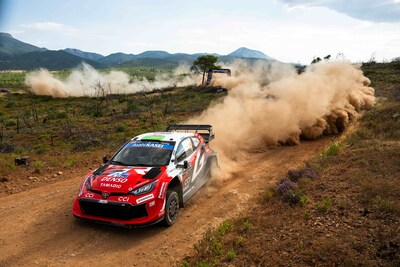
Known as 'The Rally of the Gods,' EKO Acropolis Rally Greece is notorious as one of the WRC's most punishing events for tires. Scorching air temperatures of 35°C, road surfaces exceeding 50°C under direct sun, and sharp rocky terrain define the event. For the 2026 season, the rally moved its base to Loutraki, a coastal city on the Gulf of Corinth, spanning 17 Special Stages (SS) across approximately 323 kilometers.
As crews ran the same stages twice, road conditions shifted dramatically, placing significant strain on both drivers and vehicles. The first pass presented a limited-grip environment with thick gravel, while the second exposed sharp rocks and deep ruts on the worn surface, demanding both precise vehicle control and robust tire durability.
Hankook supplied its extreme all-terrain rally tire, the Dynapro R213, helping crews take on the event's punishing off-road conditions.
Featuring a high-strength casing structure and precision-engineered tread pattern, the Dynapro R213 delivered grip and steering response amid extreme heat and rough terrain. For this event, Hankook supplied two enhanced compounds, Hard and Soft, supporting strategic tire management optimized for diverse surface conditions. The tire delivered outstanding stability and precise steering even amid sharp rocky terrain and rapid surface changes from repeated passes, once again proving Hankook's global top-tier technological capability in extreme rally conditions.
In one of the season's most demanding gravel rallies, Sébastien Ogier of Toyota GAZOO Racing World Rally Team claimed overall victory at EKO Acropolis Rally Greece, marking his second Acropolis Rally Greece win following his first triumph in 2011. Elfyn Evans continues to lead the Drivers' Championship standings with 158 points, with teammate Takamoto Katsuta following on 151 points.
The 2026 WRC season now heads to Round 9, Rally Estonia, scheduled from July 16 to 19 in Tartu, Estonia. Featuring high-speed forest gravel stages with average speeds exceeding 120 km/h and large jumps, the rally is expected to deliver intense competition as drivers push the limits amid rapid surface changes and high speeds.
Meanwhile, Hankook continues to demonstrate its tire technology on the global motorsport stage as the exclusive rally tire supplier for all WRC classes. Data and expertise gathered from extreme driving conditions are actively applied to its high-performance tire R&D, reinforcing its position as a top-tier brand in the global premium tire market.

Photo - https://mma.prnewswire.com/media/3001595/Photo_1__2026_WRC_EKO_Acropolis_Rally_Greece_Toyota_GAZOO_Racing_World_Rally_Team.jpg
Logo - https://mma.prnewswire.com/media/2866236/Hankooktire_CI_Logo.jpg
 View original content:https://www.prnewswire.co.uk/news-releases/hankook-supports-wrc-eko-acropolis-rally-greece-2026-through-extreme-heat-and-rugged-gravel-conditions-302812900.html