ROYAL CARIBBEAN OFFICIALLY WELCOMES LEGEND OF THE SEAS TO THE REVOLUTIONARY ICON CLASS, BUILT IN COLLABORATION WITH MEYER TURKU
The celebration in Turku, Finland, marked the official handover of the ship to the vacation brand ahead of a July 2026 European debut
MIAMI, June 10, 2026 /PRNewswire/ -- Royal Caribbean has officially welcomed Legend of the Seas to the family, continuing the evolution of the Icon Class lineup designed to deliver the best family vacation experiences. After nearly two years of construction at the Meyer Turku shipyard in Turku, Finland, the third Icon Class ship is now ready to make its July 2026 European debut.
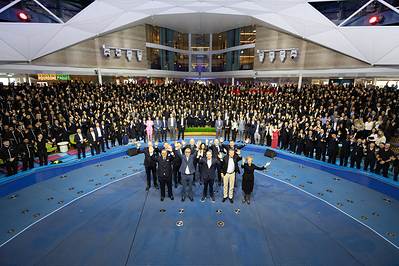
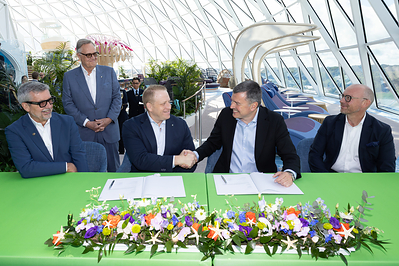
To mark the milestone, more than 1,200 crew members and partners came together for a legendary ceremony led by Royal Caribbean Group Chairman and CEO Jason Liberty, Royal Caribbean President and CEO Michael Bayley, and Meyer Turku CEO Casimir Lindholm. During the celebration, the team recognized the hard work of thousands of engineers, designers, architects and crew members who brought Legend to life and marked the transfer of ownership between Royal Caribbean and Meyer Turku.
"Today's delivery of Legend of the Seas marks another important milestone in our ambition to continuously redefine the vacation experience," said Jason Liberty, chairman and CEO, Royal Caribbean Group. "This new ship reflects the strength of the vacation ecosystem we are building – combining industry-leading ships, innovative technology, and exceptional experiences for our guests. It is an achievement only possible through the extraordinary partnership and expertise of Meyer Turku and the thousands of talented people whose creativity and commitment continue to help us design the future of vacations."
The delivery is part of the company's long-term framework agreement with Meyer Turku, securing the Group's access to shipbuilding capacity through 2036, including the order of Icon 5 to be delivered in 2028, as well as the sixth and seventh Icon Class ships in 2029 and 2030, respectively.
Soon, Legend will journey from Turku to Cadiz, Spain, where Royal Caribbean will add finishing touches before vacationers set sail on 7-night Western Mediterranean adventures from Barcelona, Spain, and Rome (Civitavecchia), Italy, this summer. In November, the ship will arrive in Fort Lauderdale, Florida, to deliver 6-night Western Caribbean and 8-night Southern Caribbean vacations with every adventure visiting Royal Caribbean's top-rated Perfect Day CocoCay.
"We're incredibly proud to introduce Legend of the Seas to vacationers and continue the legacy of the revolutionary Icon Class," said Michael Bayley, president and CEO, Royal Caribbean. "This wouldn't be possible without the many talented individuals that came together to deliver what is truly the ultimate family vacation, and we look forward to making Legend's debut this summer a legendary one."
Vacationers of all ages on Legend can experience an all-encompassing lineup of standout dining, immersive entertainment, adrenaline-filled activities and accommodations across eight neighborhoods.
- Legend will introduce the most dining at sea with 28 options for every occasion. New experiences include Hollywoodland Supper Club, a multi-course elevated dinner inspired by old Hollywood; Royal Railway – Legend Station, a five-course immersive train dining journey through the Silk Routes; and AquaDome Market, an all-inclusive food hall with five concepts, along with a new juice and smoothie bar for wellness-focused guests.
- Entertainment will span stage, air, water and ice, with productions designed for families, couples and multigenerational groups. Vacationers can experience Roald Dahl's "Charlie and the Chocolate Factory" and America's Got Talent LIVE on Legend of the Seas, alongside deck-defying performances during the AquaTheater's "Shockwave" and ice-skating spectacles at Absolute Zero's show, "Fusion".
- Families can enjoy seven pools and dedicated water experiences for all ages, including Royal Bay, the largest pool at sea; Splashaway Bay and Baby Bay in the Surfside family neighborhood; and adults-only spots at The Hideaway and Swim & Tonic swim-up bar.
- Adventurers looking for thrills can take on Crown's Edge – part skywalk, part zip line experience 154 feet above the ocean. More adrenaline-pumping activities include mini golf at a new Lost Dunes, rock climbing at Adrenaline Peak, Category 6 waterpark, the FlowRider surf simulator and more.
- Signature Icon Class favorites on Legend include the Royal Promenade's floor-to-ceiling ocean views and the Pearl – the world's largest kinetic art sculpture – and the open-air Central Park, lined with more than 30,500 real plants, restaurants, live music, and convenient pick-up windows for sushi, champagne, sparkling wine and more.
- For families of all ages, there are plenty of ways to stay in style from the exclusive Suite Neighborhood to a redesigned three-story Ultimate Family Townhouse, featuring a slide, dedicated entertainment spaces and rooms for the whole family.
Legend will be the vacation company's fourth ship powered by liquefied natural gas (LNG) and feature a proven lineup of industry-leading environmental programs, including applications ranging from waste heat recovery systems to shore power connection. As Legend advances Royal Caribbean Group's journey toward introducing a net-zero cruise ship by 2035, the vacation brand is also set to deliver their fifth ship powered by LNG with Hero of the Seas, the fourth Icon Class vacation set to debut in 2027.
"Legend of the Seas is the third Icon Class ship built at our shipyard, and constructing the series has enabled us to develop our production processes in a systematic way. We have built on the experience gained from the previous vessels and further improved efficiency with the customer and our extensive partner network," said Casimir Lindholm, CEO of Meyer Turku. "The ship is an exceptional project in terms of both scale and technical complexity, requiring strong expertise and seamless collaboration across the entire maritime cluster. At the same time, Legend of the Seas moves shipbuilding towards more energy-efficient and environmentally sustainable solutions."
Royal Caribbean's lineup of vacation experiences combines game-changing ships with one-of-a-kind destinations, including the game-changing Perfect Day CocoCay, the all-inclusive beach day experience at Royal Beach Club Paradise Island in The Bahamas and the Ultimate Santorini Day at Royal Beach Club Santorini. The vacation brand continues to grow its portfolio of signature destinations across Mexico and Australia.
Vacations on Legend are open to book on Royal Caribbean's website.
About Royal Caribbean
Royal Caribbean, part of Royal Caribbean Group (NYSE: RCL), has delivered memorable vacations for more than 50 years. The cruise line's game-changing ships and exclusive destinations revolutionize vacations with industry-leading innovations and an all-encompassing combination of experiences, from thrills and ways to chill, to dining and entertainment, for every type of family and vacationer. Voted "Best Cruise Line Overall" for 23 consecutive years in the Travel Weekly Readers Choice Awards, Royal Caribbean makes memories with adventurers across more than 300 destinations in 80 countries on all seven continents, including Perfect Day CocoCay in The Bahamas and Royal Beach Clubs in Paradise Island and Santorini, plus Royal Beach Club Lelepa launching October 2027.
Media can stay up to date by following @RoyalCaribPR on X and visit www.RoyalCaribbeanPressCenter.com. For additional information or to book, vacationers can visit www.RoyalCaribbean.com, call (800) ROYAL-CARIBBEAN or contact their travel advisor.

 View original content to download multimedia:https://www.prnewswire.co.uk/news-releases/royal-caribbean-officially-welcomes-legend-of-the-seas-to-the-revolutionary-icon-class-built-in-collaboration-with-meyer-turku-302796988.html