Snapsight Unveils Remix, Turning Live Event Sessions into Reports, Campaigns and Decks in Real Time
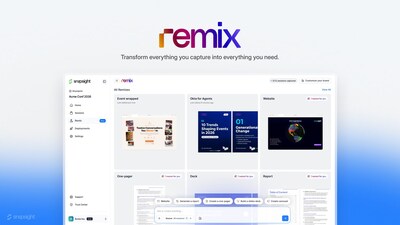
Remix turns live event content into branded reports, social campaigns, white papers, decks, and visual assets, ready in minutes, while the event is still happening.
LONDON, May 13, 2026 /PRNewswire/ -- Snapsight, the AI content platform for live events, today announced the launch of Remix, a visual AI content studio that turns event sessions into branded, ready-to-publish assets.
As events become always-on content engines, organizers are under increasing pressure to deliver real-time value, insights, and summaries beyond the stage. Traditional post-event content workflows are often too slow to capture audience attention. This shift is driving demand for content that can be created, distributed, and consumed while events are still in progress.
Unveiled at the MOAT Conference on May 12, Remix helps event organizers transform the ideas, insights, and conversations happening on stage into finished content: social campaigns, executive reports, sponsor recaps, white papers, presentation decks, visual summaries, and other shareable assets.
Unlike generic AI writing tools that generate text from prompts, Remix creates complete visual assets from real event content. It combines Snapsight's event intelligence layer with multimodal generative AI, brand systems, and layout generation to produce content that is written, designed, formatted, and ready to share.
Snapsight has powered more than 900 events in 75+ languages and has been recognized with industry honors including the Skift Meetings Award and the Events Industry Council's Adaptation and Innovation Award. The platform is used by leading associations, enterprises, and event organizations including ICCA, AICPA, IMEX, and ASAE.
Remix is the next chapter.
Most event teams spend weeks producing post-event content after audience attention has already moved on. The content that does get published is often generic, off-brand, or stitched together from raw transcripts, recordings, slide decks, and disconnected AI tools.
Remix changes that. It turns captured event knowledge into visual content that can travel across channels: LinkedIn posts, Instagram carousels, editorial graphics, executive one-pagers, sponsor reports, stakeholder decks, session recaps, campaign assets, and long-form thought leadership.
Remix is built to change how event teams create content from the moments happening live on stage.
"We pioneered real-time event AI to capture what's said as it's said," said Vamshi Velmajala, CEO and Co-Founder of Snapsight. "Remix is what happens next. It turns captured event content into work that travels, across social, sales, sponsors, members, and stakeholders long after the session ends."
Availability
Remix will be generally available to existing Snapsight customers starting May 30, 2026. Snapsight will demonstrate Remix live at IMEX Frankfurt and across the Snapsight World Tour through June 2026, including ASAE MMC+Tech, MPI World Education Congress, FIEXPO, and InfoComm.
About Snapsight
Snapsight is the AI content platform for the events industry. The platform helps organizers capture live sessions through transcription, captions, live translation, real-time summaries, audience insights, and post-event content creation. Used across 75+ languages, Snapsight turns event content into live intelligence and, with Remix, into branded reports, visual assets, social campaigns, white papers, slide decks, and other ready-to-publish work.
Learn more at snapsight.com.
Media Contact:
Kushagra Agrawal
kushagra@gevme.com
+91 9870741543

Photo - https://mma.prnewswire.com/media/2976679/889598.jpg
Logo - https://mma.prnewswire.com/media/2976678/Snapsight_Logo.jpg
 View original content:https://www.prnewswire.co.uk/news-releases/snapsight-unveils-remix-turning-live-event-sessions-into-reports-campaigns-and-decks-in-real-time-302769041.html